Product Journal #14: Fading Stars, digital literacy through play
·2 min read·nLink team

Product Journal · part 14 of 20All parts
- 1.the nLink core and its add-ons
- 2.The short link core and the journey of a click
- 3.Bekçi, the security layer for short links
- 4.Share cards, QR codes and the bio page
- 5.Analytics and growth tools
- 6.nLink for teams and developers
- 7.Link Universe, your links become planets (beta)
- 8.Live activities in the universe, space football and flying car races
- 9.Live stream holograms on planets, relayed to Twitch, YouTube and Kick
- 10.Parental controls for accounts of under-18s
- 11.Two ships, Âfâk and Kristal; waking in the pod and walkable rooms
- 12.Four games you play with your ship; Rescue, Courier, Orbit Slingshot and Asteroid Mining
- 13.Games on planets; Sudoku Planet, Mushroom Planet and Slime Workshop
- 14.Fading Stars, digital literacy through play
- 15.Design your planet; look studio, identity, surface editor and buildings
- 16.Day, night and dynamic weather on planets; realistic textures
- 17.The Link Universe is open to all; guest pilots and playing on phones
- 18.Core updates; daily site analytics, cookie choice and a new Bekçi rule
- 19.Seyyah (Eren); a new game of Anatolian legend and Sufi lore in the Link Universe
- 20.Cutscenes, automatic travel and neighbouring planets in the sky
Fading Stars is the Link Universe's story series. A rustling grey fog drifts through the universe, stealing the suns' light: the Noise. Guided by Nova, each chapter lands on a planet and teaches one digital literacy skill through play. The Noise is not an enemy; the fog clears as you make the right calls.
Five chapters, five skills
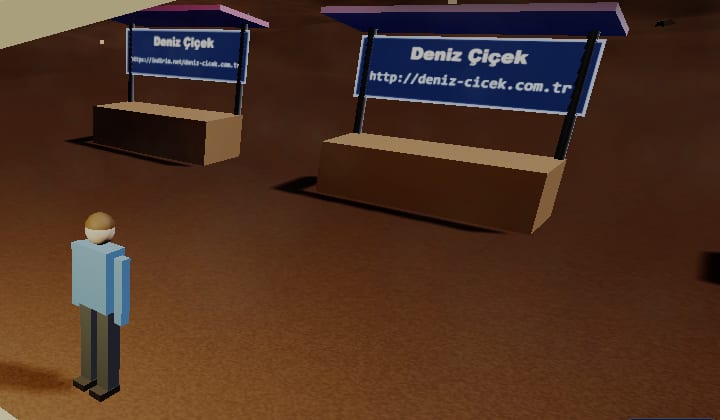
- Fake Shops: spotting phishing addresses. Find the shop whose sign matches, letter for letter, the address your friend noted from a business card. The test is not ".com": any extension or letter that differs from the card is fake. Badge: Address Detective.
- Mystery Square: checking where a QR code leads before opening it. Only one QR code on the restaurant boards opens the real menu; the scope shows the address inside and reveals a sticker pasted on top. Badge: QR Explorer.
- Crowded Square: protecting privacy when sharing. Cover the sensitive parts of a photo (location, faces, personal details) with stickers and choose the audience: everyone, friends or only me. Badge: Privacy Guard.
- Echo Tower: verifying sources. Several boards answer a claim; pick the source that is named and responsible for the topic, with an official address and a current date. Badge: Source Hunter.
- Rest Orbit: balancing screen time. In each situation choose the balanced one of three options; a right choice is followed by a short breathing break inside the ring. Badge: Balance Master.
How it works
- The first chapter is always open; the next one opens when you finish the previous.
- Each chapter has three rounds. Get them all right on the first try for 3 stars. On a wrong pick the tricky part of the fake address is marked in red, so you see what happened.
- Rounds and correct answers are kept on the server; stars and badges are given only for a real solve.
- Finishing a chapter for the first time earns points for that chapter's planet. Replaying is free.
- After 45 minutes of play with the tab open, the guide suggests a break once.
For parents
On accounts linked through parental controls, finishing a chapter adds its name, skill and stars to the "Skills learned today" line in the parent panel.